



Difference between eau de parfum and eau de toilette: A Practical Scent Guide

The main difference between eau de parfum and eau de toilette boils down to one simple thing: concentration. An Eau de Parfum (EDP) packs a higher percentage of pure fragrance oil, which gives it more intensity and staying power. On the other hand, an Eau de Toilette (EDT) is lighter and often feels more refreshing. This one distinction really changes everything, from how long the scent lasts to its price tag.
Key takeaways
- Eau de toilette contains 5-15% fragrance oil, while eau de parfum contains 15-20%, which is the core difference between the two formats.
- EDT typically lasts 3 to 5 hours and EDP typically lasts 6 to 8 hours on skin.
- Higher alcohol content gives EDT a bigger initial projection, while EDP's heavier oils create a longer-lasting sillage trail.
- EDT suits daytime, office, and warm weather; EDP is better for evenings, special events, and cold weather.
By Navid Ara, Fragrancelord. Published 2026-02-04, reviewed 2026-09-27.
Understanding Fragrance Concentration
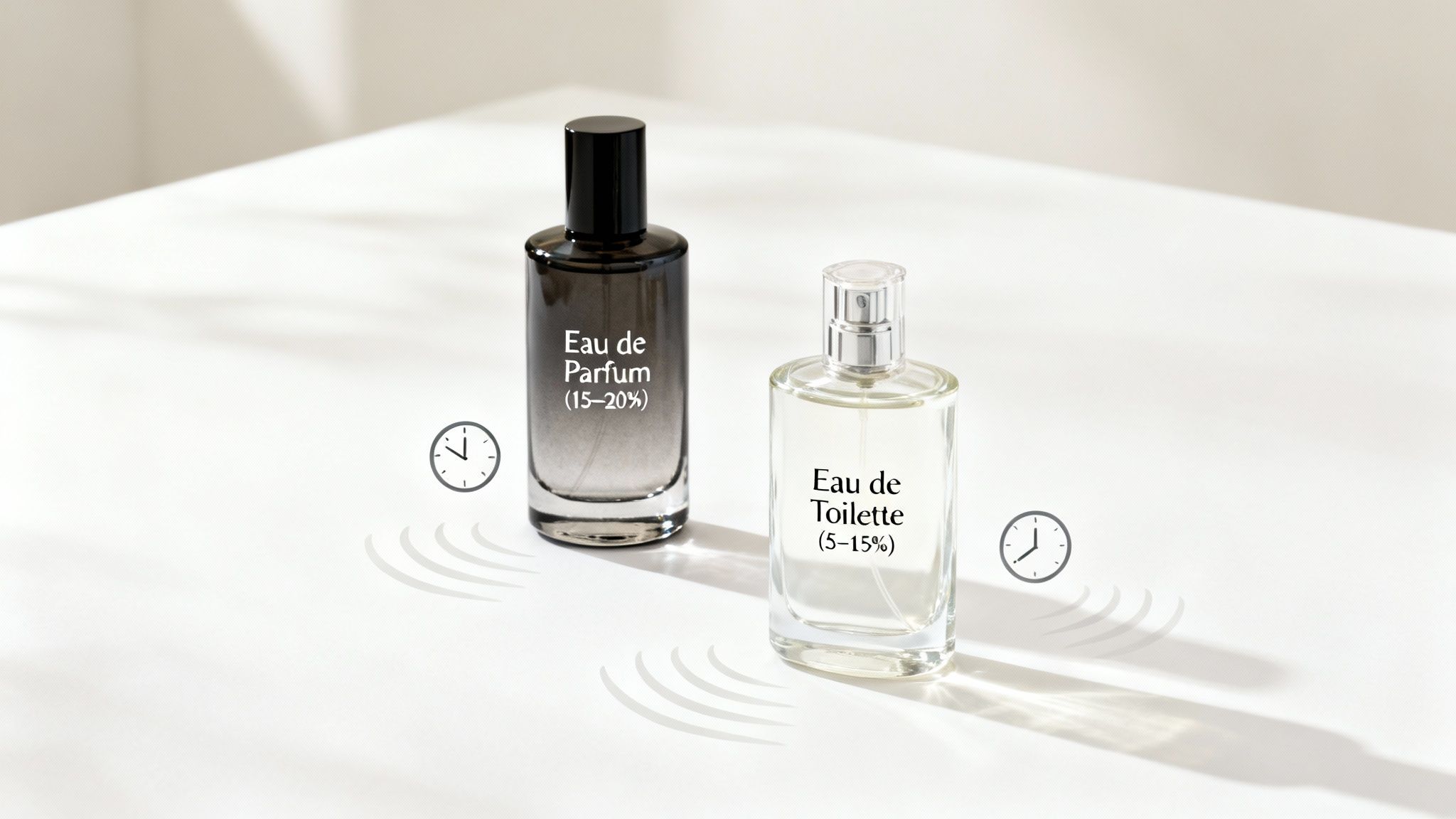
When you see "EDP" or "EDT" on a perfume bottle, it's not just random letters; it's a code telling you about the scent's strength and character. These aren't entirely different fragrances but different versions of the same core scent, each tweaked for a slightly different experience.
The heart of the matter is the concentration of perfume oil. An Eau de Toilette typically contains between 5-15% pure perfume oil, which is then diluted with alcohol and a bit of water. An Eau de Parfum, however, has a much richer formula, with a concentration of 15-20% perfume oil. This higher concentration is what makes it more potent and long-lasting on your skin.
This fundamental difference is precisely what dictates how a fragrance will perform throughout the day. You can find more deep dives into the science of fragrance on our YouTube channel.
Key Takeaway: I like to think of it like coffee. An EDT is your everyday morning cup—light, pleasant, and just right for the start of the day. An EDP is more like a shot of espresso—intense, bold, and designed to leave a lasting impression.
EDP vs EDT At a Glance
To give you a clearer picture and help you decide which is right for your next purchase from Fragrance Lord, it helps to see the main distinctions side-by-side. This quick reference table breaks it all down.
| Characteristic | Eau de Toilette (EDT) | Eau de Parfum (EDP) |
|---|---|---|
| Concentration | 5-15% Fragrance Oil | 15-20% Fragrance Oil |
| Typical Wear Time | 3 to 5 hours | 6 to 8 hours |
| Projection | Moderate; often brighter initially | Stronger; more consistent over time |
| Best For | Daily wear, office, warm weather | Evenings, special events, cold weather |
| Cost | Generally more affordable | Higher initial price, better value per spray |
As you can see, the choice isn't just about price but about performance and occasion. Each has its time and place, and knowing the difference helps you build a more versatile fragrance wardrobe.
How Fragrance Concentration Shapes Your Scent Experience
When you look at a perfume bottle, the numbers—like 15-20% oil concentration for an Eau de Parfum versus 5-15% for an Eau de Toilette—can seem a bit clinical. But what those percentages really describe is two completely different ways a scent can come to life on your skin. It’s not simply about making a fragrance stronger or weaker; it’s about crafting a unique aromatic journey.
The Slow Unfolding Of An Eau De Parfum
Think of an Eau de Parfum’s higher oil concentration as a kind of time-release for scent. It doesn't shout its presence all at once. Instead, it allows the fragrance to develop slowly and deliberately, giving you the full story the perfumer intended to tell.
The bright top notes introduce the fragrance, but they soon make way for a richer, more complex heart that truly defines its character. This eventually settles into the deep, long-lasting base notes that anchor the scent for hours. It’s a complete, evolving narrative.
This is why an EDP often feels more intimate and luxurious. A long-lasting EDP from our Amouage collection, for instance, is built to reveal its layers of spice, resin, and precious woods over a wear time of 6 to 8 hours. This makes it the perfect choice for evenings out or any time you want your fragrance to leave a lasting, sophisticated impression.
The Bright Burst Of An Eau De Toilette
An Eau de Toilette, on the other hand, is designed for a totally different effect. With less perfume oil and more alcohol, it creates a much brighter, more vibrant opening. The top notes—often crisp citruses, fresh herbs, or light florals—are the main event here, making an immediate, energetic statement.
It’s like a brilliant, refreshing splash of scent, which is why EDTs are so fantastic for daytime use, office wear, or hot summer days. A refreshing EDT from a house like Creed delivers an initial jolt of energy that’s meant to be uplifting and clean. While it doesn't stick around as long, usually fading after 3 to 5 hours, its purpose is to invigorate the senses right away.
An EDP tells a story over several hours, revealing its chapters slowly. An EDT, however, makes a brilliant opening statement, capturing a single, perfect moment.
This is why calling an EDP a "stronger" version of an EDT misses the point. They are structured differently by design. To really get a feel for this, it helps to dive into the concept of understanding fragrance notes and how they shape a scent’s journey from the first spray to the final dry-down.
Ultimately, choosing between them comes down to what you want from your fragrance. Are you looking for a complex scent that evolves with you through the night? Or do you prefer a bright, expressive spritz to kickstart your day? Each format offers a distinct and beautiful way to wear a scent.
And if you’re curious about even richer, more potent concentrations, you might want to check out our guide comparing Extrait de Parfum and Eau de Parfum.
Comparing Sillage And Projection In EDP And EDT
When you're trying to decide between an Eau de Parfum and an Eau de Toilette, two words always come up: projection and sillage. It's easy to get them mixed up, but they describe two very different things. Projection is your scent bubble—how far the fragrance radiates from your skin. Sillage, a French word meaning "wake," is that gorgeous scent trail you leave behind when you walk past.
A lot of people automatically assume that an EDP, being stronger, will always have a bigger presence. But the truth is a bit more complex, and frankly, more interesting. It all comes down to the kind of statement you want to make.
The Immediate Aura Of Eau De Toilette
An Eau de Toilette is often the sprinter of the two. It makes a big, explosive first impression right out of the gate. Why? The higher alcohol content acts like a rocket launcher for the fragrance molecules, helping them lift off your skin much faster right after you spray.
This creates a powerful, noticeable projection for the first hour or two. Think of it as a bright, confident announcement of your arrival.
- Powerful Opening: The extra alcohol really gives the top notes a push, creating a vibrant, expansive scent cloud that gets you noticed immediately.
- Ideal for Daytime: This initial burst of energy makes EDTs a fantastic choice for daily wear. They feel fresh and alive without being too heavy for the office or a casual outing.
A perfect example is a crisp EDT from our Acqua di Parma collection. It's designed for that exact effect—a blast of Mediterranean freshness that's instantly uplifting and recognizable. It projects beautifully at first, creating a refreshing aura that's hard to miss.
The Lasting Trail Of Eau De Parfum
Now, an Eau de Parfum plays a different game. It’s the marathon runner. With less alcohol and more precious fragrance oil, it tends to sit a bit closer to the skin, creating a more personal, intimate scent bubble. Its projection might be softer at first, but its real power is in its incredible sillage.
As the heavier oil molecules warm up with your body heat, they release the scent slowly and steadily. This creates a rich, elegant trail that follows you wherever you go. People might not smell you from across the room, but they will absolutely notice the beautiful scent you leave behind.
Key Insight: Choose an EDT when you want your fragrance to introduce you. Choose an EDP when you want it to be remembered long after you've left.
A bold and complex EDP, like one from Parfums de Marly, is a masterclass in this. It might seem more subdued when you first apply it, but its deep base notes anchor the fragrance, leaving a sophisticated and unforgettable trail that lasts for hours. To really get into the weeds on this, check out our guide on the difference between sillage and longevity in perfumes.
Choosing The Right Fragrance For Any Occasion
The real magic of fragrance isn't just finding a scent you love—it's knowing how to match it to the moment. Grasping the difference between eau de parfum and eau de toilette is the secret to getting this right every time. It empowers you to pick a fragrance that fits the season, the setting, and the kind of impression you want to leave.
Think of it like building a wardrobe. You wouldn't wear a heavy wool coat to a summer picnic, right? The same logic applies here. Your choice should always be guided by the context: a busy day at the office, a laid-back weekend brunch, or a glamorous evening out all call for a different approach.
Daytime Freshness And Warm Weather: The Case for EDT
For the daily grind, especially in an office or during the warmer spring and summer months, an Eau de Toilette is almost always your best bet. Its lighter formula and brighter, more vibrant opening notes create a clean, refreshing feeling that's energizing without being loud. Plus, when the temperature rises, heat naturally makes any scent more potent, so an EDT keeps you smelling great without becoming overbearing.
These are your crisp, airy scents that bring a sense of clarity and subtle confidence.
- Office Settings: An EDT is polite. It has just enough presence to be noticed in a good way, but it won't overwhelm your coworkers in a shared space.
- Casual Outings: Its bright and breezy character is perfect for running errands, meeting friends for lunch, or any daytime activity.
- Hot Climates: When it's humid and hot, a lighter fragrance is simply more comfortable to wear.
If you're looking for an exceptional daytime scent, an EDT from Maison Francis Kurkdjian is a fantastic place to start. Their creations are known for being incredibly sophisticated and fresh—the perfect signature for everyday elegance.
Evening Richness And Cold Weather: When EDP Shines
When the sun goes down or a chill hits the air, it’s time for an Eau de Parfum to step into the spotlight. Cold weather can actually dull a fragrance’s projection, so the higher concentration of an EDP is just what you need to make an impact. Its deeper, more complex scent profile is perfect for crafting a memorable, luxurious vibe at special events.
An EDP unfolds slowly on the skin, revealing different layers of its character over several hours, making it a companion that lasts through a long evening. For a deeper dive, check out our guide on how to choose a perfume for special occasions.
This guide helps visualize the decision: are you looking for an immediate, bright aura (EDT) or a deep, lingering trail (EDP)?
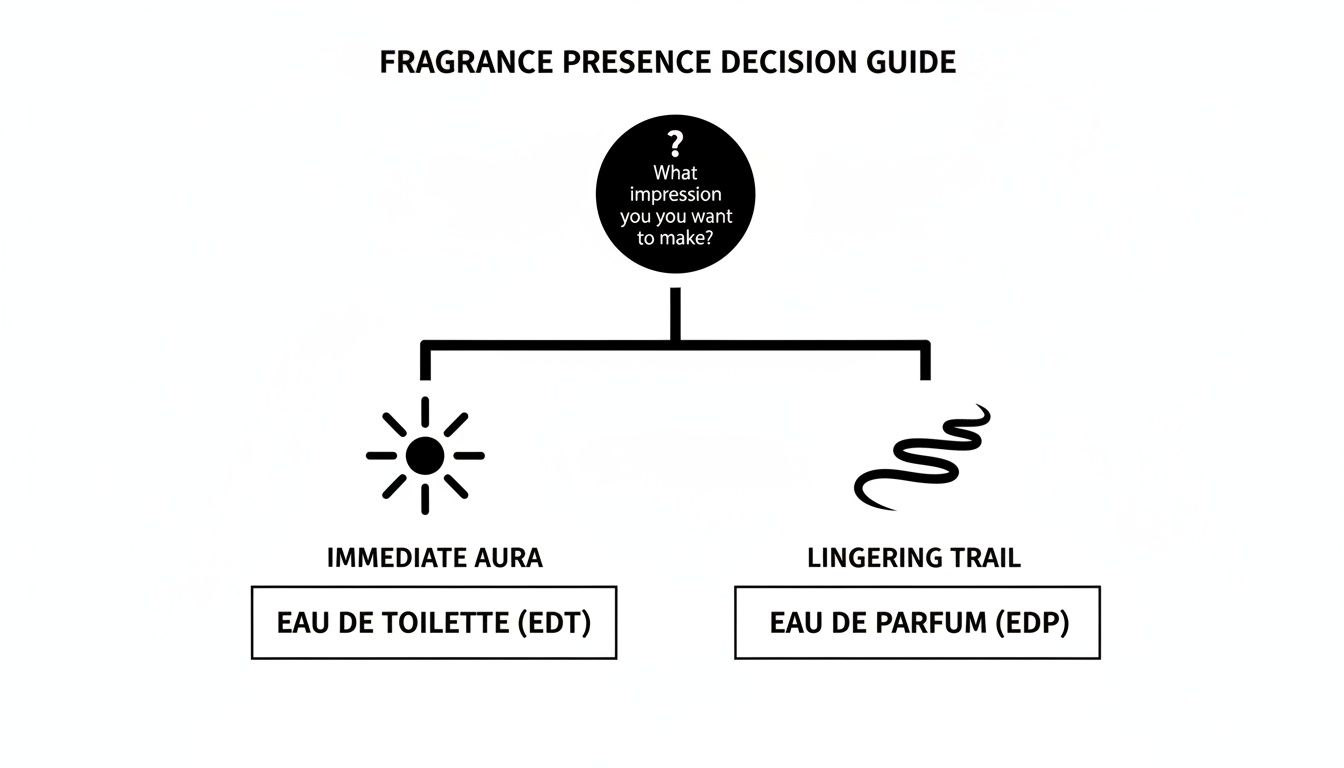
Ultimately, your choice boils down to the kind of presence you want to have in that specific situation.
For a scent that leaves a lasting, unforgettable trail, an EDP is unmatched. Its rich base notes of amber, oud, and spices create a sense of warmth and sophistication ideal for formal events.
Consider exploring the opulent EDPs from a house like Amouage. Their fragrances are famous for their incredible depth and complexity, making them the ultimate final touch for an evening where you truly want to stand out. By matching your fragrance to the occasion, you turn your scent from an afterthought into a powerful asset.
A Practical Guide to Price and Long-Term Value
When you're standing at the fragrance counter, the price tag is often the first thing that jumps out. It’s no secret that an Eau de Parfum usually costs more upfront, making an Eau de Toilette look like the savvier, budget-friendly pick. But the real story of value isn’t just about that initial cost—it’s about performance and how much fragrance you actually use over time.
Thinking in terms of "cost-per-wear" really flips the script. Because an Eau de Parfum is packed with a higher concentration of perfume oils, it delivers a scent experience that goes the distance.
Calculating the True Cost Per Wear
An EDP usually only needs one or two spritzes to last all day or through the night. On the other hand, you might find yourself reaching for your EDT for a refresh two or three times to keep the scent noticeable. This seemingly small difference in application habits dramatically changes how quickly a bottle empties.
Let's look at a quick example:
- Eau de Parfum: A 100ml bottle generally gives you over 1,000 sprays. Using just two sprays a day, that bottle can easily last you more than a year.
- Eau de Toilette: That same 100ml bottle also has over 1,000 sprays, but if you reapply it just once (four sprays total per day), it’s gone in half the time.
All of a sudden, that pricier EDP starts to look like a very smart investment, especially if it’s a signature scent you wear daily. Its staying power means you use less, making your purchase last significantly longer. You can dive deeper into what drives these prices in our guide on what makes a perfume expensive.
An Eau de Parfum is an investment in longevity. While the initial cost is higher, its staying power often delivers superior long-term value, as a single bottle will carry you much further.
When an EDT Offers the Best Value
This doesn't mean an Eau de Toilette is ever a bad buy. Far from it. EDTs actually provide fantastic value for certain situations. Their more accessible price point makes them the perfect gateway into the world of fine fragrances, letting you try out a new scent profile without a major financial commitment.
An EDT is also the perfect choice for anyone who loves having a diverse fragrance wardrobe. For the price of one premium EDP, you could pick up several different EDTs from our extensive collection, giving you the freedom to match your scent to your mood, the season, or a specific occasion.
At Fragrance Lord, our Today’s Best Deals section is always worth a look, as we often have incredible prices on both formats. It’s a great way to find an EDP that fits your investment plan or an EDT that lets you explore something new, guaranteeing you get amazing value no matter what you choose.
Expert Tips For Testing And Applying Your Fragrance
Knowing the difference between an Eau de Parfum and an Eau de Toilette is a great start, but the real test comes when you actually wear them. The only way to truly understand how a fragrance will perform is to try it on your skin, because our individual body chemistry plays a huge role in how a scent develops and lasts.
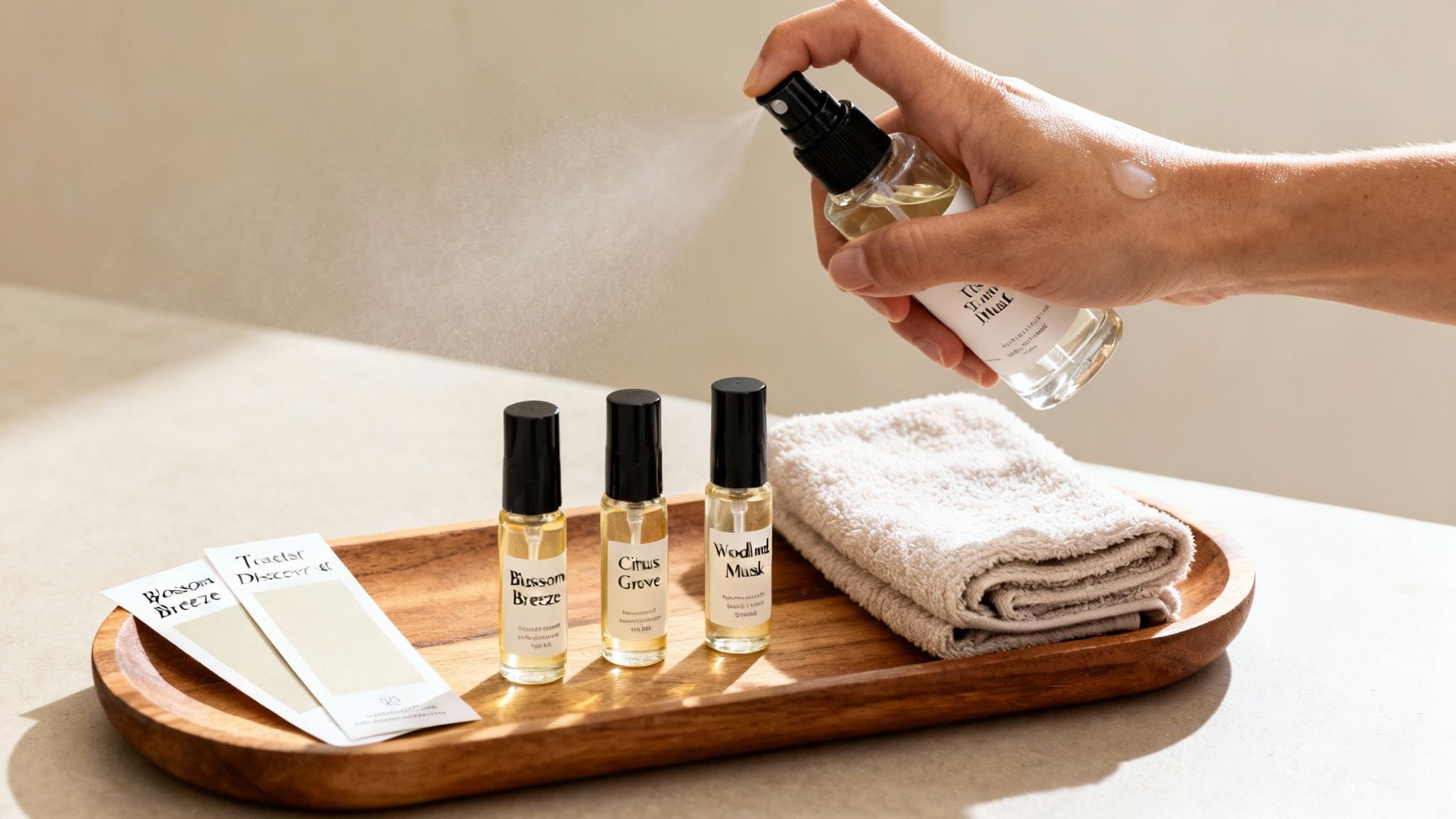
Before you invest in a full bottle, it's so important to see how different concentrations wear throughout the day. This is where discovery sets and travel sizes are your best friends. They give you a low-commitment way to experience the entire journey of a scent, from its first bright notes all the way to its deep, final dry-down hours later.
Discover Your Perfect Match
Here at Fragrance Lord, we've put together an incredible selection of fragrance samples and discovery sets for this very reason—to help you explore. You can spray an EDP on one wrist and its EDT version on the other to get a real-time, side-by-side comparison of how they behave. It’s the best way to make sure your final choice is one you'll be happy with for a long time.
To really get it right, it helps to learn how to test a perfume before buying properly. Trust me, it involves more than just a quick sniff from a paper strip at the counter.
Think of your skin as the final ingredient in any fragrance. Always test a new scent on yourself and give it a few hours to see how it truly settles and interacts with your personal chemistry.
The Art Of Fragrance Layering
Once you've found a few scents you enjoy, don’t hesitate to get creative and start layering. This is where you can craft a signature scent that is completely your own. Layering is a fantastic technique for boosting longevity, adding a new dimension of complexity, or just dialing the intensity of your favorite fragrances up or down.
Here are a couple of ideas to get you started:
- Boost Your Base: Try applying a fresh, light Eau de Toilette all over, then add a single, targeted spray of a richer, complementary Eau de Parfum to your pulse points. This will give your scent incredible depth and staying power.
- Amplify Key Notes: If you adore the vanilla in your favorite EDP, try layering it over an EDT with a sharp citrus opening. The combination can create a stunning gourmand fragrance that beautifully evolves as the day goes on.
Playing with layering turns your collection from a few separate bottles into a versatile fragrance wardrobe. It encourages a fun, ongoing journey of scent discovery and makes every purchase feel like a new set of creative possibilities.
Your Fragrance Questions Answered
Even after getting the hang of the difference between eau de parfum and eau de toilette, a few common questions always seem to pop up. Here are some quick answers to clear up any lingering confusion and help you choose your next bottle with total confidence.
Can an Eau de Toilette Ever Last Longer Than an Eau de Parfum?
Absolutely, it can happen. While EDPs are designed for longer wear, the actual lifespan of a scent comes down to more than just oil concentration. The specific ingredients and your own skin chemistry play a huge role.
For instance, a really well-made EDT from our collection loaded with heavy base notes—think rich woods, amber, or vanilla—can easily outlast a fleeting, citrus-heavy EDP on certain skin types.
Is One Better for Sensitive Skin?
An Eau de Parfum generally contains less alcohol than an Eau de Toilette because it has a higher concentration of perfume oil. Alcohol can be quite drying, so if you have sensitive skin, you might find an EDP is a bit gentler.
That said, everyone's skin is different. The golden rule is to always patch-test a new fragrance before committing.
How to Patch-Test: Just spritz a small amount on a discreet spot, like the inside of your elbow. Give it a full 24 hours to see if any irritation develops before you start wearing it properly.
How Do I Make My Eau de Toilette Last Longer?
Getting more life out of your EDT is easier than you think. The key is to create the right canvas.
- Moisturize First: Fragrance clings much better to hydrated skin, so apply an unscented lotion before you spray.
- Target Pulse Points: Apply your scent to warm areas like your wrists, the base of your neck, and behind your ears. The heat helps project the fragrance.
- Layer Up: If there’s a matching body lotion or shower gel, using it first will create a scented base that really anchors the fragrance for hours.
- Don't Rub!: This is a big one. Avoid rubbing your wrists together after spraying. The friction crushes the delicate scent molecules and makes the top notes burn off way too fast.
Ready to put all this newfound expertise into practice? The best way to learn is by exploring. Dive into the world of scent and find a match that truly feels like you at Fragrance Lord. Whether you're after a fresh, easy-to-wear EDT or a deep, memorable EDP, our collection is waiting.
Discover your next signature scent today at https://fragrancelord.com.