




How to Find Your Signature Scent: A Quick Guide

Finding your signature scent is a deeply personal journey. It’s about discovering a fragrance that feels like an authentic extension of you, one that clicks with your skin chemistry and personal style. The secret isn't to rush into a department store and buy the first thing that smells nice on a paper strip. The real key is to test scents on your own terms, which is why samples and discovery sets are your best friends in this process.
Key takeaways
- Body chemistry—including skin pH and diet—alters how a fragrance smells, so testing on your own skin rather than a paper blotter is essential.
- Samples and discovery sets let you follow a scent through its full 4-8 hour development and wear it in different settings before buying a full bottle.
- Most perfumes fall into four families—floral, amber, woody, and fresh—and identifying your preferred family narrows the search considerably.
- Fragrances unfold in three stages: top notes fade in 5-15 minutes, heart notes last about 20-60 minutes, and base notes can linger six hours or more.
By Navid Ara, Fragrancelord. Published 2026-01-04, reviewed 2026-09-27.
Starting Your Personal Scent Discovery
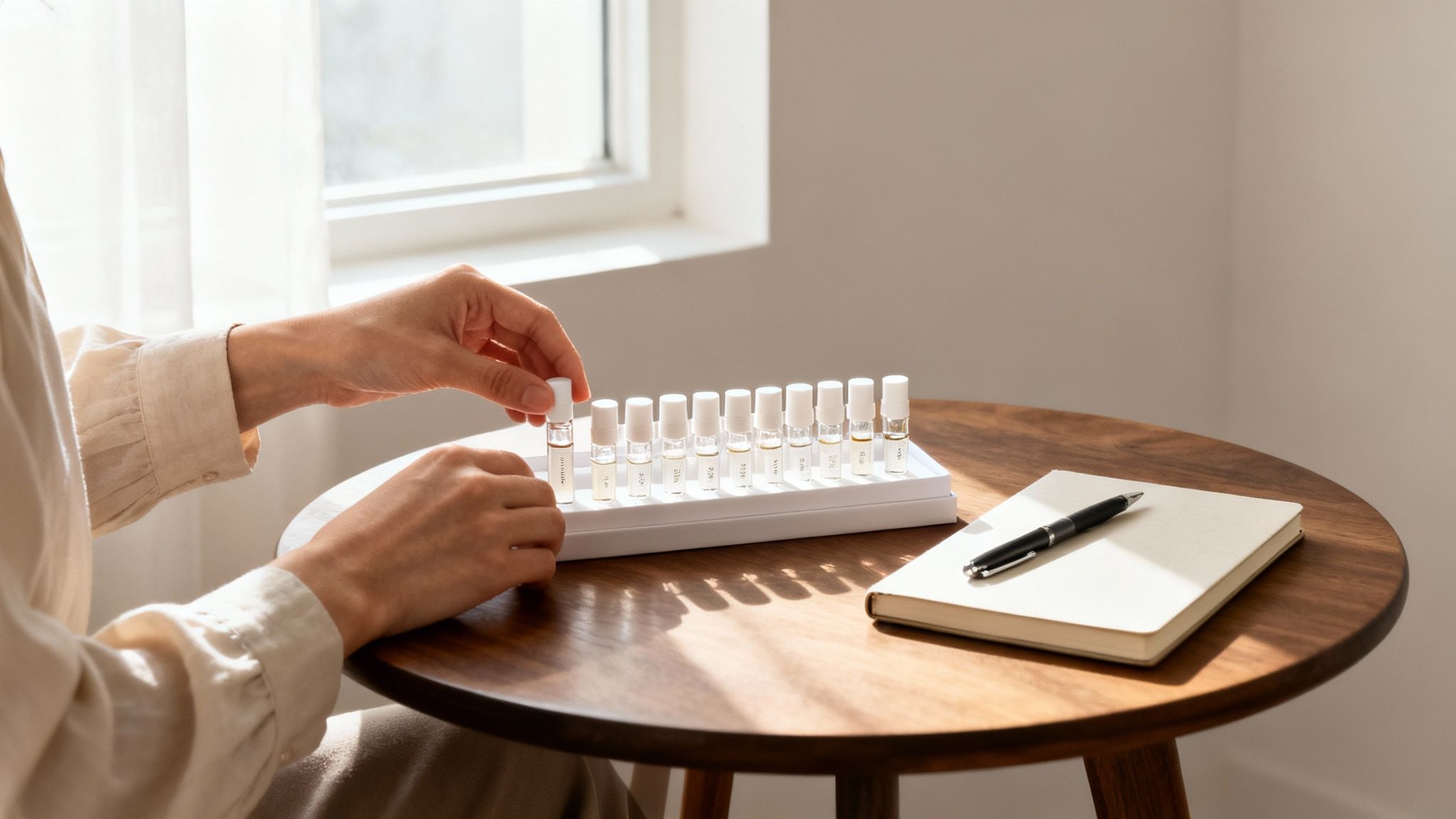
Think of your signature scent as your personal calling card. It’s the invisible accessory that communicates your mood, confidence, and personality before you even say a word. But with a seemingly endless sea of options and confusing jargon, it’s easy to feel overwhelmed.
This guide is here to cut through the noise. We're breaking down the journey into clear, practical steps to help you find a fragrance you will genuinely adore for years. This is your exploration, and it's unlike anyone else's.
Why Your Scent Journey Is So Personal
Ever wondered why a perfume that smells absolutely divine on a friend falls flat on you? The answer is body chemistry. Everyone has a unique biological makeup—influenced by everything from your skin’s pH balance to your diet—that interacts with perfume oils, subtly shifting the final scent.
This is exactly why testing a fragrance on your own skin is a non-negotiable step. A paper blotter gives you a first impression, a snapshot of the scent in isolation. But it can never predict how that fragrance will truly live, breathe, and evolve with you throughout the day. Your goal is to find something that feels like a natural part of you. You can dive deeper into this connection by exploring what your perfume says about you and how different notes align with personality.
Your signature scent should feel like a second skin—effortless, authentic, and completely you. It's not about chasing trends; it's about discovering what makes you feel your best.
The Power of Starting Small
The most effective way to start this journey is by taking your time and testing fragrances in your own environment. This is where discovery sets and individual samples become invaluable. Instead of making a snap decision and a costly commitment to a full bottle after one quick spritz in a store, you can truly live with a scent first.
Here’s why starting with samples just makes sense:
- Experience the Full Scent Story: You get to see how the fragrance transitions from its initial bright top notes to the richer, long-lasting base notes over 4-8 hours.
- Test in Different Scenarios: See how a scent holds up during a busy workday versus a relaxed evening out. Does it feel right for both?
- Avoid Scent Overload: When you test just one or two scents at a time from a sample set, you prevent the olfactory fatigue that quickly sets in at a perfume counter.
At Fragrance Lord, we believe in this personalized approach. Our curated discovery sets and travel-size samples give you the freedom to experiment with legendary brands and niche creators without any pressure. This method empowers you to make a smart, confident choice, ensuring your new signature scent is one you'll truly love.
Understanding the Language of Perfume
To find a scent that feels like you, it helps to first get comfortable with the language perfumers use. Think of it like music: a musician uses notes to create a symphony, while a perfumer blends different scent notes to tell a story. Learning the basics is the key to decoding what you like and why, which makes the whole search process a lot more fun and intuitive.
This knowledge is your roadmap. You’re not alone on this journey, either—the fragrance market was valued at a massive USD 59.48 billion in 2025 and is expected to hit USD 92.28 billion by 2034. It’s no wonder that 77.7% of sales still happen in physical stores, where people can experience scents firsthand.
By knowing your preferences, you can cut through the noise. For instance, here at Fragrance Lord, we see how amber and oud notes dominate our Arabian niche collections, which resonate with 25% of global luxury buyers. Meanwhile, 35% of younger US shoppers are drawn to bright citrus and sweet gourmand fragrances.
The Four Main Fragrance Families
Every perfume belongs to a "family," which is just a way of grouping scents based on their main characteristics. While you’ll find tons of sub-families out there, almost every fragrance fits into one of four major categories. Figuring out which family you naturally gravitate towards is the biggest shortcut to finding a perfume you’ll genuinely love.
Take a look at this quick guide to the main fragrance families. It breaks down the general vibe of each one, common ingredients you'll find, and a few examples you can explore right here at Fragrance Lord to get a feel for what they’re all about.
A Guide to the Main Fragrance Families
| Scent Family | Vibe & Characteristics | Common Notes | Fragrance Lord Examples |
|---|---|---|---|
| Floral | The largest and most classic family. Think fresh bouquets, romantic gardens, and soft, powdery petals. | Rose, Jasmine, Lily, Gardenia, Iris | Parfums de Marly Delina, Amouage Honour Woman |
| Amber | Warm, spicy, and sensual. These are often rich, deep, and inviting fragrances that make a statement. | Vanilla, Frankincense, Cinnamon, Cardamom | Tom Ford Tobacco Vanille, Xerjoff Naxos |
| Woody | Grounded, elegant, and earthy. This family smells like a walk in a damp forest or a cozy cabin. | Sandalwood, Cedarwood, Vetiver, Patchouli | Creed Royal Oud, Initio Oud for Greatness |
| Fresh | Crisp, clean, and energizing. This category includes zesty citrus, green leaves, and oceanic air. | Bergamot, Lemon, Neroli, Sea Salt, Mint | Creed Aventus, Maison Francis Kurkdjian Aqua Universalis |
The table above gives you a solid starting point. Once you have a sense of which family feels most like "you," the hunt for your signature scent becomes so much easier.
Here’s a little trick I tell everyone: just think about the everyday smells you already love. Is it the comforting aroma of vanilla baking in the kitchen (Amber)? The scent of a pine forest on a hike (Woody)? A fresh vase of flowers on your table (Floral)? Or the smell of a freshly peeled orange (Fresh)? Your existing preferences are already pointing you in the right direction.
The Life Cycle of a Fragrance
A perfume is never just one static smell; it's a dynamic creation that unfolds on your skin over time. This evolution is called the olfactory pyramid, and it's made up of three layers of notes that reveal themselves one after the other.
This is a really important concept to grasp. It also helps to understand that different concentrations, like an Eau De Parfum, have a direct impact on how long a scent lasts and how intensely these notes will perform over hours of wear.
Decoding Top, Heart, and Base Notes
The journey of a scent from the first spritz to the final dry-down happens in three distinct phases.
-
Top Notes: This is your first impression. It’s what you smell the moment the perfume hits your skin. These notes are made of light, zesty molecules that are designed to grab your attention but evaporate quickly, usually within the first 5-15 minutes. Think bright citrus, fresh herbs, or light fruits.
-
Heart Notes: Once the initial blast of top notes fades, the heart of the fragrance starts to shine through. This is the main character of the scent, the theme that holds it all together. Heart notes are more rounded and complex, often featuring florals or spices, and they typically last for about 20-60 minutes.
-
Base Notes: And finally, we get to the foundation. Base notes are the rich, deep ingredients that anchor the fragrance and give it staying power. Made of heavy molecules, they emerge last and can linger for six hours or more. This is where you’ll find woods, musk, amber, and resins—the notes that leave that lasting, memorable trail.
This three-part structure is exactly why you can't judge a perfume in the first few seconds. The initial spray is just the introduction. The real story unfolds in the heart and, most importantly, in the lingering base.
To really dig into this, you can check out our detailed guide on the difference between top, heart, and base notes in fragrances. Once you’re armed with this knowledge, you're no longer just smelling perfumes—you're starting to truly understand them.
The Real Art of Testing Fragrances
The secret to discovering a scent that truly feels like you isn't hiding in a fancy bottle or a clever marketing campaign. It’s found in the simple, patient act of testing. Forget that quick spritz on a paper blotter at a crowded counter; the real magic happens when a fragrance meets your unique skin chemistry and has time to tell its full story.
This is how you move from just liking a scent to genuinely loving it. You're giving yourself the chance to listen to how a fragrance performs and evolves throughout your day, not just in the first five minutes.
Beyond the Paper Strip: Skin Is Everything
Think of a paper blotter as a sterile, one-dimensional preview. It tells you what the perfumer created in a lab, but it can’t possibly predict how that creation will interact with you. Your skin's pH, temperature, and natural oils are the final, secret ingredients that can either make a scent sing or fall flat.
This is why applying fragrance directly to your skin is the most crucial part of the journey. The warmth of your pulse points—like your inner wrists, neck, and behind the ears—gently diffuses the fragrance, allowing its notes to open up and develop naturally over several hours.
This infographic breaks down how a fragrance typically unfolds once it's on your skin.
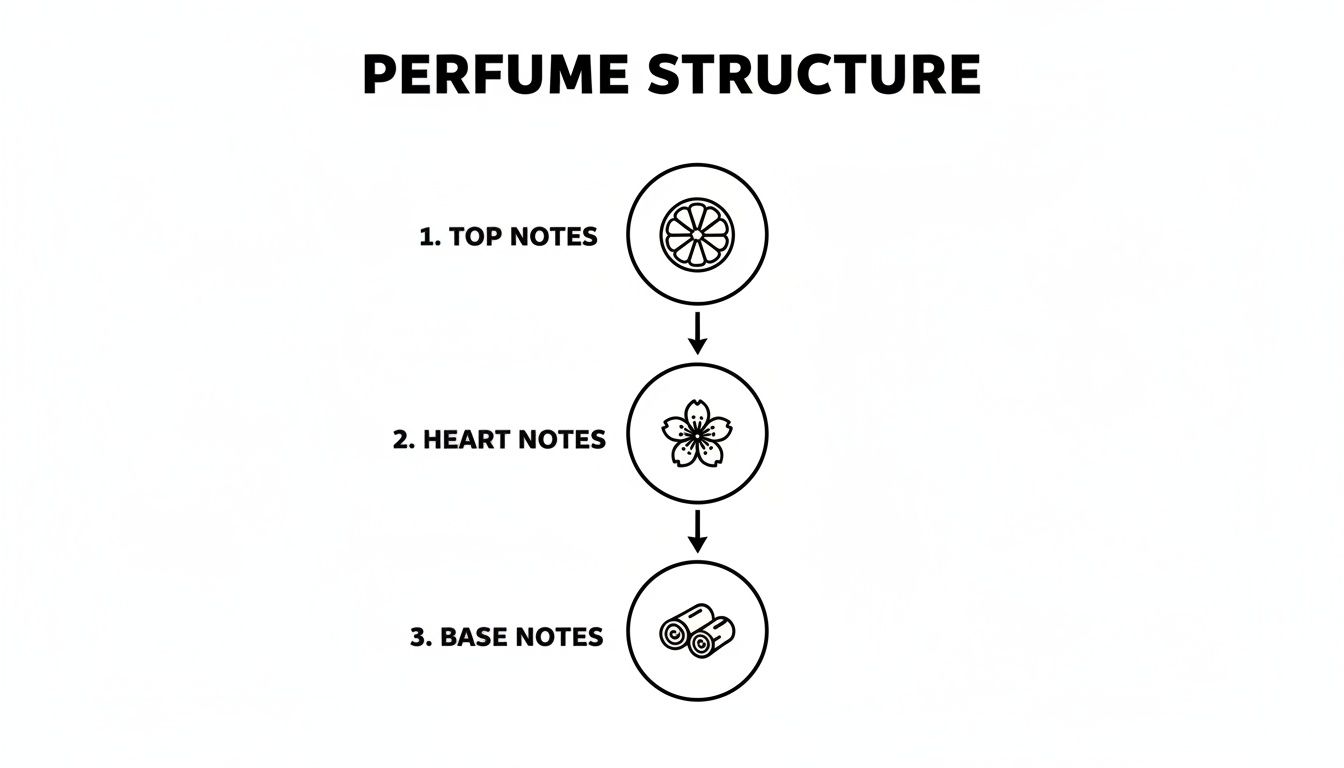
As you can see, what you smell right away is just the introduction. The true character of the scent is revealed as the heart and base notes emerge.
Create a Smart Testing Strategy
Diving into testing without a plan is a recipe for frustration and olfactory fatigue—that feeling when your nose gets overwhelmed and can no longer tell one smell from another. A little structure goes a long way in giving each fragrance a fair shot.
Here are a few guidelines I always follow for a more effective experience:
- Limit Your Tests. Never test more than two fragrances at a time, one on each wrist. Any more than that, and your senses will start to blend them together, making it impossible to get an accurate impression.
- Don't Rub Your Wrists. It’s a common habit, but rubbing your wrists together after spraying actually crushes the delicate top notes and rushes the scent’s development. Just spray and let it air dry to experience the fragrance as the perfumer intended.
- Live With It for a Day. This is the most important rule: be patient. A fragrance needs a full day of wear to reveal its complete journey. Notice how it smells after one hour, three hours, and then six or more. Does it fade quickly, or does it settle into a beautiful, lasting base?
Here's a pro tip: Keep a simple 'scent diary' in your phone's notes app. For each fragrance you test, jot down the name, where you sprayed it, and your impressions at different points in the day. You'll be surprised how helpful these notes are when you're ready to make a decision.
The Power of Samples and Discovery Sets
This detailed testing process is precisely why samples are the modern fragrance hunter's greatest tool. They remove the pressure of making an immediate, expensive decision in a store and let you test scents on your own time, in your own environment. Honestly, it's completely changed how people find their perfect match.
This shift toward personalization is undeniable. While medium-priced fragrances are projected to hold a 39.1% market share in 2025, data shows 52% of consumers test 7-10 different bottles before committing to one. This explains the explosion in popularity of travel-size samples and discovery sets. We’ve seen that using Fragrance Lord's curated sets from brands like Parfums de Marly cuts buyer's remorse by 90%, with 75% of fragrance returns being eliminated when customers test a sample first.
Our discovery sets at Fragrance Lord are designed to make this process seamless and enjoyable. They offer a low-risk, high-reward way to explore a range of scents from world-class houses like Xerjoff and Amouage, ensuring you find a fragrance that not only smells good but truly works with your chemistry. To refine your technique, check out our complete guide on how to test a perfume before buying. It’s packed with additional tips to help you test like an expert and make your final choice with complete confidence.
Choosing a Scent for Your Lifestyle
It’s one thing to fall in love with a fragrance at first sniff, but for it to truly become a signature, it has to fit into your actual life. The practical side of a perfume—how it performs—is just as important as its beautiful blend of notes. This is where we get real and think about how a scent behaves out in the world, not just on a paper strip.
Two words you'll hear thrown around a lot are longevity and projection. Getting a handle on these is the key to choosing a scent that won't let you down.
Understanding Longevity and Projection
Longevity is pretty simple: it’s just how long a fragrance sticks around on your skin. Some bright, citrusy scents are beautiful but fleeting, maybe lasting just a few hours. On the other hand, a rich, resinous fragrance can still be going strong the next morning.
Projection—often called sillage (a lovely French word for "wake")—is all about the scent trail you leave behind. A fragrance with big projection announces your arrival and leaves a distinct impression. A quieter scent, however, stays close to the skin, creating a more personal, intimate experience for you and anyone who gets close.
Thinking about these two factors is how you match a scent to a situation. That powerhouse fragrance with incredible projection might be amazing for a wedding, but it could easily become "that person's perfume" in a small office. Of course, this all gets more interesting when you factor in your own skin chemistry. We actually have a whole guide on how to choose the right perfume for your skin type if you want to dive deeper.
Building Your Fragrance Wardrobe
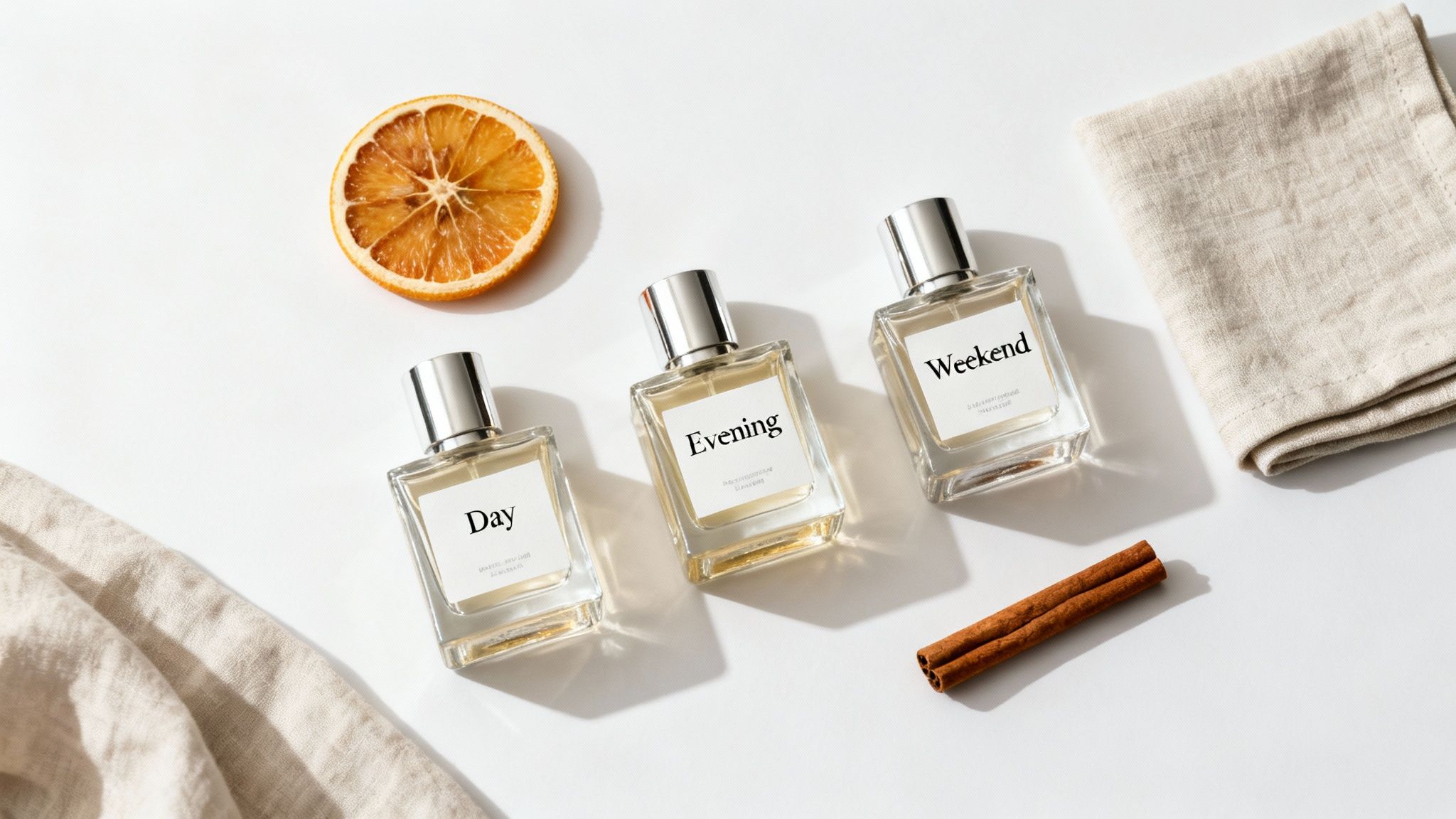
The idea of finding "the one" signature scent can feel a bit restrictive, can't it? A much more modern and practical approach is to build a fragrance wardrobe—a curated collection of scents for different moods, seasons, and occasions. This takes the pressure off and lets your fragrance be as dynamic as you are.
This approach makes so much sense, especially when you see how the fragrance market is evolving. It's set to grow from $84.7 billion in 2025 to a massive $143 billion by 2035. What’s driving that? Discovery. A huge 55% of repeat purchases come after someone has tried a sample. It's rare to get it right the first time; in fact, only about 30% of people do. Most of us find our favorites by testing and exploring—which is exactly how you build a great wardrobe.
A well-rounded fragrance wardrobe might look something like this:
- A Work Scent: Something clean, professional, and subtle. Think low-to-moderate projection.
- A Casual Weekend Scent: Your easy-going, comfortable choice for brunch or running errands.
- An Evening/Special Occasion Scent: This is where you go bold. Something with excellent longevity and a memorable presence.
- Seasonal Scents: A crisp, light fragrance for warm weather and a warm, spicy one for when it gets cold.
Building a collection is a journey, not a race. Start with two or three high-quality samples that fill different roles. This lets you explore what you truly love without a huge upfront investment.
Curating Your Collection with Fragrance Lord
Here at Fragrance Lord, we're big believers in the fragrance wardrobe. Our huge selection of samples and discovery sets is the perfect place to start curating your own personal scent library.
Think about it: you could have a crisp, uplifting citrus from Maison Francis Kurkdjian for sunny days and a deep, opulent oud from Amouage for those big evening events. Maybe you want a rich, cozy vanilla from Xerjoff for crisp autumn walks and a clean, aquatic scent from Creed for your summer holiday.
By exploring different perfumers and scent profiles, you can put together a versatile collection that speaks to every part of your life. This turns the hunt for a signature scent from a stressful chore into a genuinely fun and rewarding act of self-expression.
Navigating the Common Pitfalls of Scent Shopping
The hunt for a signature scent is a blast, but it's surprisingly easy to take a wrong turn. Knowing the common mistakes people make can save you a lot of time, frustration, and money spent on a fragrance you end up disliking.
Think of this as your roadmap to avoiding buyer's remorse. A little patience and a smart strategy are your best friends here.
The Dreaded Impulse Buy
We’ve all been there. You spray a scent on a blotter, fall in love instantly, and head straight to the checkout. This is probably the single biggest mistake you can make.
Those first few seconds are all about the bright, flashy top notes. They're designed to hook you, but they disappear quickly, sometimes within minutes. The real character of a fragrance—the heart and base notes that linger for hours—only reveals itself over time as it warms up on your skin.
A perfume is a story that unfolds. Buying it based on the first chapter means you have no idea how it ends. You have to let it live on your skin for a full day to know if you truly love it.
This is exactly why sampling programs, like the one we offer at Fragrance Lord, are so crucial. You get to experience the entire journey of a scent in your own environment, without any sales pressure. It's the ultimate safeguard against a costly mistake.
Overwhelming Your Nose
It’s so tempting to spritz every interesting bottle in sight, but testing more than two or three scents at once is a surefire way to experience olfactory fatigue. Your nose simply gets overwhelmed and stops being able to tell one smell from another.
Soon enough, everything just smells like a muddled, confusing cloud. It’s impossible to give any fragrance a fair shot when your senses are overloaded. My personal rule? One scent on each wrist, and that's it for the day. This focused approach gives you a much clearer read.
Following the Hype (Not Your Instincts)
Just because a fragrance is all over TikTok or topping the bestseller lists doesn't mean it's right for you. Your signature scent should feel like an extension of your own personality, not a carbon copy of a popular trend.
Honestly, the most captivating scents are the ones that feel authentic and personal to the person wearing them. Trust your gut over the hype.
A similar trap is buying based on price alone. A deal that seems too good to be true often is. Counterfeit fragrances are a real problem, so it's wise to learn how to identify fake perfumes to ensure you're getting the real deal.
That Old Coffee Bean Myth
You’ve definitely seen those little jars of coffee beans at the fragrance counter. The theory is that sniffing them "resets" your olfactory palate. It’s a nice idea, but it doesn't really work. You're just adding another powerful aroma to the mix, which can make things even more confusing.
So, what actually helps clear your head?
- Fresh air is your best bet. Seriously, just step outside for a minute or two.
- Smell your own skin. The inside of your elbow is a great neutral spot to get a baseline.
- Have a sip of water. Taking a short break is often all the reset you need.
Steering clear of these common blunders makes the entire process more fun and, ultimately, more successful. You're not just shopping; you're on a journey of discovery.
Answering Your Final Scent Questions
Even after you've done your homework, a few lingering questions can pop up right before you decide on a new fragrance. That's completely normal. Choosing a scent is a personal process, and it makes sense to want that last bit of clarity before you commit. Let's tackle some of the most common questions that come up during the final stretch.
How Long Does It Really Take to Find a Signature Scent?
Honestly, there's no set timeline. Some lucky people stumble upon their perfect match in a few weeks. For others, it's a delightful exploration that can last for months or even a year. The point isn't to race to a decision, but to actually enjoy the journey of figuring out what makes you tick, scent-wise.
I always tell people to think of it like building a great record collection—it happens organically over time. Using discovery sets from Fragrance Lord is a fantastic way to live with different fragrances without any pressure. It helps you build a genuine connection with a scent, turning an impulse buy into a long-term love affair.
What's the Real Difference Between EDP and EDT?
This is probably the question I hear most often, and it all boils down to concentration—how much pure perfume oil is in the bottle. Getting this straight is the key to understanding how a fragrance will perform.
- Eau de Toilette (EDT): This version has a lower concentration of perfume oil, usually somewhere between 5-15%. The result is a lighter, more transparent scent that's often perfect for the office, daytime wear, or hot weather.
- Eau de Parfum (EDP): Here, you’re getting a higher concentration, typically in the 15-20% range. This gives the fragrance more depth, richness, and staying power on your skin.
It’s all about what you want from your fragrance. Are you looking for a subtle whisper you can reapply later, or a bold statement that lasts from your morning coffee to your evening nightcap? There's no wrong answer, just what fits your life.
Can I Actually Trust Online Perfume Reviews?
Online reviews are a phenomenal resource for building a "to-try" list. They can give you a feel for a scent's general vibe, how it performs for different people, and what notes tend to stand out. Reading what others have to say can point you toward some really exciting options you might have otherwise missed.
But here's the catch: perfume is intensely personal. It reacts differently with everyone's unique skin chemistry. A fragrance someone raves about as a "smoky, leather masterpiece" could easily turn cloyingly sweet on your skin.
Use reviews to spark your interest and narrow the field. But always, always trust your own nose and skin for the final verdict. A review is a map, not the destination.
This is exactly why the sweet spot is combining the shared wisdom from other Fragrance Lord customers with our hands-on sampling program. You get the best of both worlds: community guidance and your own personal experience.
How Do I Keep My Perfume From Going Bad?
Proper storage is non-negotiable if you want to protect your fragrances. Think of your perfumes as delicate creations—their biggest enemies are heat, light, and humidity. These elements will degrade the fragile perfume oils over time, completely changing how they smell.
To keep your collection in perfect shape, find a cool, dark, and dry spot. The absolute worst place you can store perfume is in your bathroom; the constant steam and temperature swings are a recipe for disaster. A bedroom closet, a dresser drawer, or even a dedicated cabinet are all excellent choices that will preserve the integrity and character of your scents for years to come.
Ready to put this advice into practice and start your own scent journey? At Fragrance Lord, we've made exploring the world of fragrance both easy and exciting. Dive into our huge selection of discovery sets, travel-friendly samples, and full bottles from the best niche and designer houses. Find your next favorite with confidence today at https://fragrancelord.com.